Quick answer
What you need to know
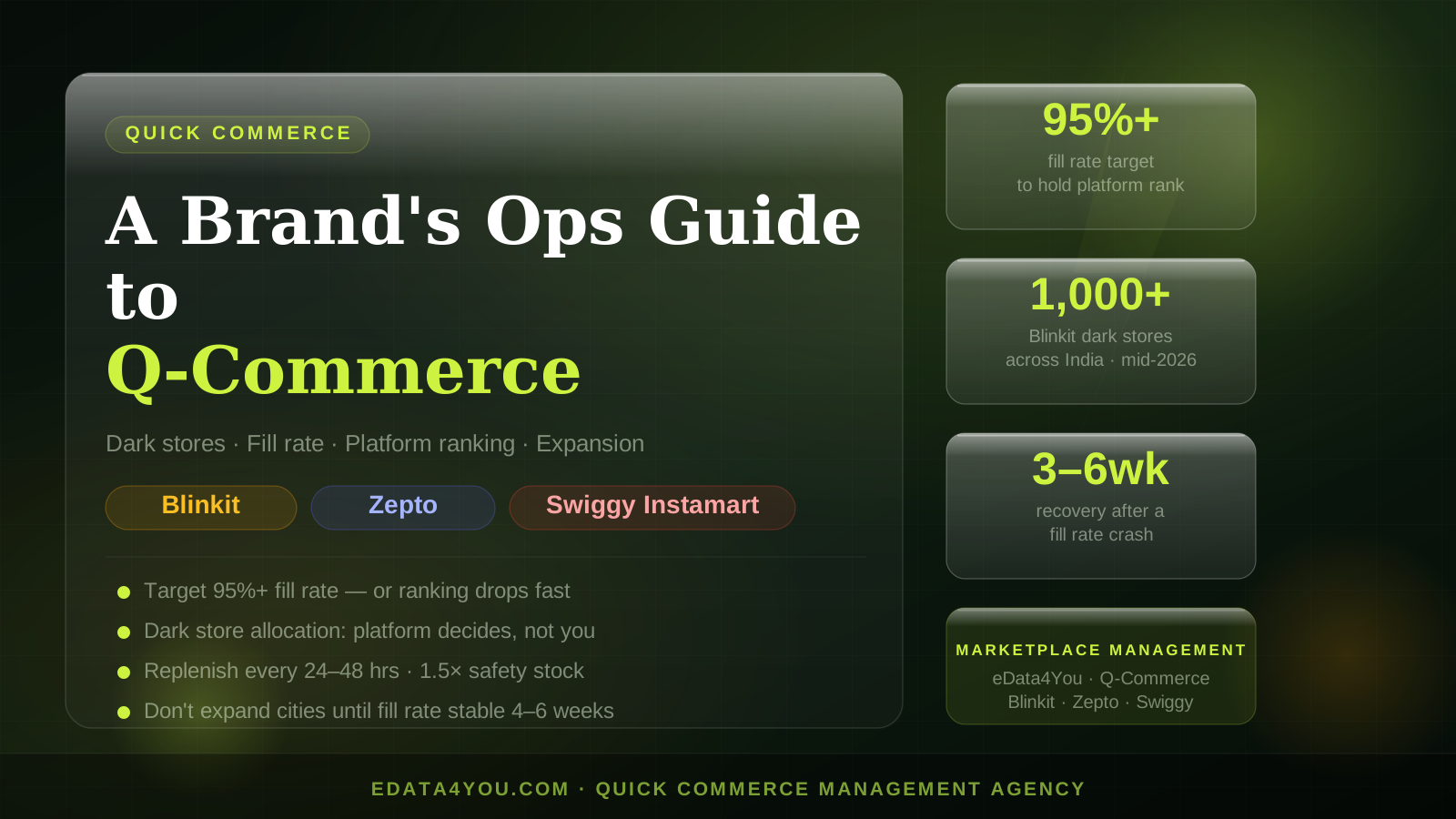
Quick commerce is operationally unlike any other ecommerce channel — the 10-minute delivery promise lives or dies on fill rate, dark store inventory management, and platform ranking algorithms that most brand teams don't fully understand before they go live.
What Quick Commerce Actually Is
The Major Platforms and Their Differences
How Brands Actually Go Live
Premium reader tools
Turn insight into action
The brief, before you dive in
A practical snapshot of what this guide will help you understand and apply.
Key takeaways
- What Quick Commerce Actually Is: Q-commerce is not fast shipping from a regular warehouse.
- The Major Platforms and Their Differences: Blinkit (owned by Zomato since 2022) holds roughly 45% of India's q-commerce market share.
- How Brands Actually Go Live: The onboarding sequence on every q-commerce platform follows the same general structure: brand approval, catalog listing, pricing agreement, and initi…
- Fill Rate: The Metric That Controls Everything: Fill rate is the percentage of orders your products receive that are fulfilled without cancellation.
Most brand teams approach quick commerce (q-commerce) the same way they approached Amazon two years ago: upload a catalog, price it, run some promotions, and see what happens. That approach works reasonably well on traditional marketplaces. On Blinkit or Zepto, it produces a 60% fill rate, a ranking penalty in week two, and three months of recovery work. The operational logic of q-commerce is fundamentally different, and understanding it before you go live is the difference between a successful channel and an expensive experiment.
Need help applying this? Explore our Marketplace Management Services.
What Quick Commerce Actually Is
Q-commerce is not fast shipping from a regular warehouse. It is fulfillment from dark stores — small, dedicated micro-fulfillment centers embedded in residential and commercial neighborhoods, stocking a curated set of SKUs and serving a 2–3 km delivery radius. The 10-minute delivery promise is only possible because the inventory is already inside the catchment, not traveling from a distant warehouse.
A typical dark store is 2,000 to 5,000 square feet. It looks nothing like a warehouse: shelves are organized for picker speed, not storage density. There are no walk-in customers. The store exists solely to fulfill app orders. Blinkit operates over 1,000 dark stores across India as of mid-2026. Zepto runs a comparable network, concentrated heavily in Tier 1 cities. Each platform's city coverage, average order value, and SKU focus differ.
The Major Platforms and Their Differences
Blinkit (owned by Zomato since 2022) holds roughly 45% of India's q-commerce market share. It has the widest dark store network, the broadest SKU range, and the most mature brand onboarding process. Commission structures vary by category but typically run 10–18%.
Zepto has grown aggressively in metro cities — Mumbai, Bengaluru, Delhi NCR, Hyderabad, Pune, Chennai — and has become a serious competitor in premium grocery and personal care categories. Zepto Co.Commerce is their brand onboarding arm.
Swiggy Instamart is Swiggy's q-commerce vertical, with strong penetration in South India and good cross-sell potential to Swiggy's food delivery user base. Avg order sizes tend to be slightly lower than Blinkit.
BigBasket Now (Tata) is the q-commerce extension of BigBasket, strongest in grocery and FMCG. It operates differently — many orders still fulfill from larger BigBasket warehouses depending on the city and product.
Dunzo has retrenched significantly since its 2023 funding troubles and is no longer a primary channel for most brands. Prioritize Blinkit, Zepto, and Swiggy Instamart as your core three.
Each platform has a different onboarding timeline (Blinkit averages 4–6 weeks from brand approval to first sale; Zepto can be faster for approved categories), different catalog upload formats, and different account management touchpoints.
How Brands Actually Go Live
The onboarding sequence on every q-commerce platform follows the same general structure: brand approval, catalog listing, pricing agreement, and initial dark store allocation.
Brand approval involves submitting GST registration, FSSAI license (for food/grocery), trademark certificates, and product images. Some categories — personal care, health supplements, electronics — require additional documentation. Once approved, you get seller access to the catalog portal.
Catalog listing for q-commerce is stricter than Amazon in one critical dimension: weight and volume must be exact. Platforms charge logistics costs internally based on declared weight. If your declared weight for a 500g product is listed as 400g, the platform absorbs the difference on every order — and they will correct it against your account retroactively or suppress the listing. Title formats follow platform-specific templates (Blinkit uses Brand + Product Name + Variant + Pack Size). Images must be product-only on white background; lifestyle images are rejected at catalog validation.
Dark store allocation is the next step. New brands typically start with 2 to 5 dark stores per city, selected by the platform based on your product category and the demand patterns they see in those catchment areas. You do not choose which dark stores stock your product in the early phase — the platform does, based on historical data.
Turn these recommendations into a working process with Marketplace Management Services.
Fill Rate: The Metric That Controls Everything
Fill rate is the percentage of orders your products receive that are fulfilled without cancellation. Target: 95% or above, maintained across all dark stores carrying your SKUs.
Below 95%, your visibility in search results starts to decline. Below 90%, platforms apply an explicit ranking penalty. Below 85% for more than a few days, the platform may remove your product from dark store allocation entirely.
The three main causes of fill rate failure:
- Stockout: You ran out of inventory at a dark store but the listing was still live. Every order that comes in during stockout is a cancellation.
- Wrong weight/volume data: Orders that fail at the picker stage because the physical product doesn't match the catalog data.
- Inventory sync failure: Your inventory feed to the platform is delayed or broken, so the platform is selling units that no longer exist.
A stockout on Amazon costs you one sale and maybe a minor keyword ranking dip. A stockout on Blinkit cascades: each cancellation drops your fill rate, which drops your ranking, which reduces impressions, which means fewer new orders to rebuild the score. Recovery from a fill rate crash takes 3–6 weeks of clean operations.
How Platform Ranking Works
Blinkit and Zepto both use algorithmic ranking to determine which products appear at the top of category and search pages. The inputs to that algorithm include:
- Fill rate (weighted heavily — this is the primary operational signal)
- Conversion rate on impressions
- Availability score — the percentage of time your product is available vs. listed
- Recency of sales — cold SKUs with no recent order history rank lower
There is no shortcut around this. Promotional placements (Blinkit's premium placements, Zepto's sponsored slots) can buy temporary visibility, but if your operational metrics are poor, paid placement won't overcome the organic rank suppression. Brands that launch with good catalog data and clean inventory sync establish strong early rank signals that compound over time.
Inventory Management Across Dark Stores
Each dark store serves its own catchment. Demand at a dark store in Koramangala (Bengaluru) is not the same as demand at a dark store in Indiranagar 500 meters away — consumer demographics, basket sizes, and category preferences differ. Platforms share some demand data with brands once you're established, but in early months you're largely managing to targets they set.
Replenishment cycles are typically daily or every 2 days. You ship to a platform consolidation hub or directly to dark stores (depending on the platform's logistics model), and inventory is distributed from there. The critical discipline is making sure each dark store always has enough buffer to cover the next replenishment cycle plus a safety stock of 1.5–2× average daily demand. Running too lean on safety stock is the single most common cause of avoidable fill rate drops.
When to Expand
The temptation after a successful first month is to push into more cities. Resist it. Expand to more dark stores within your initial city first, once fill rate has been stable at 95%+ for 4 to 6 consecutive weeks. Only then move to a new city.
New cities mean new dark store allocations, new demand patterns, new replenishment logistics, and a fresh set of fill rate risks. Managing one city cleanly is far more valuable than managing three cities at 80% fill rate.
Q-commerce requires operational infrastructure — catalog precision, inventory buffers, daily fill rate monitoring, and replenishment discipline — that most brand teams don't have when they first go live. Getting the operational setup right before you launch is cheaper than repairing a ranking crash after.
eData4You's quick commerce management service handles catalog setup, dark store inventory planning, fill rate monitoring, and platform account management across Blinkit, Zepto, and Swiggy Instamart — so your brand goes live with the right foundations in place.
Let's build something great together
A dedicated team of ecommerce, design, and data specialists - ready to scale your business across every marketplace.
Recent Posts
Latest on Social
Grow your sales on Amazon, Walmart & more
Our marketplace specialists handle listings, SEO, catalog & ads - end to end.
Talk to an Expert
Amit Sharma
Founder & IT Head | Project Management & IT Strategy Expert
Leave a Comment